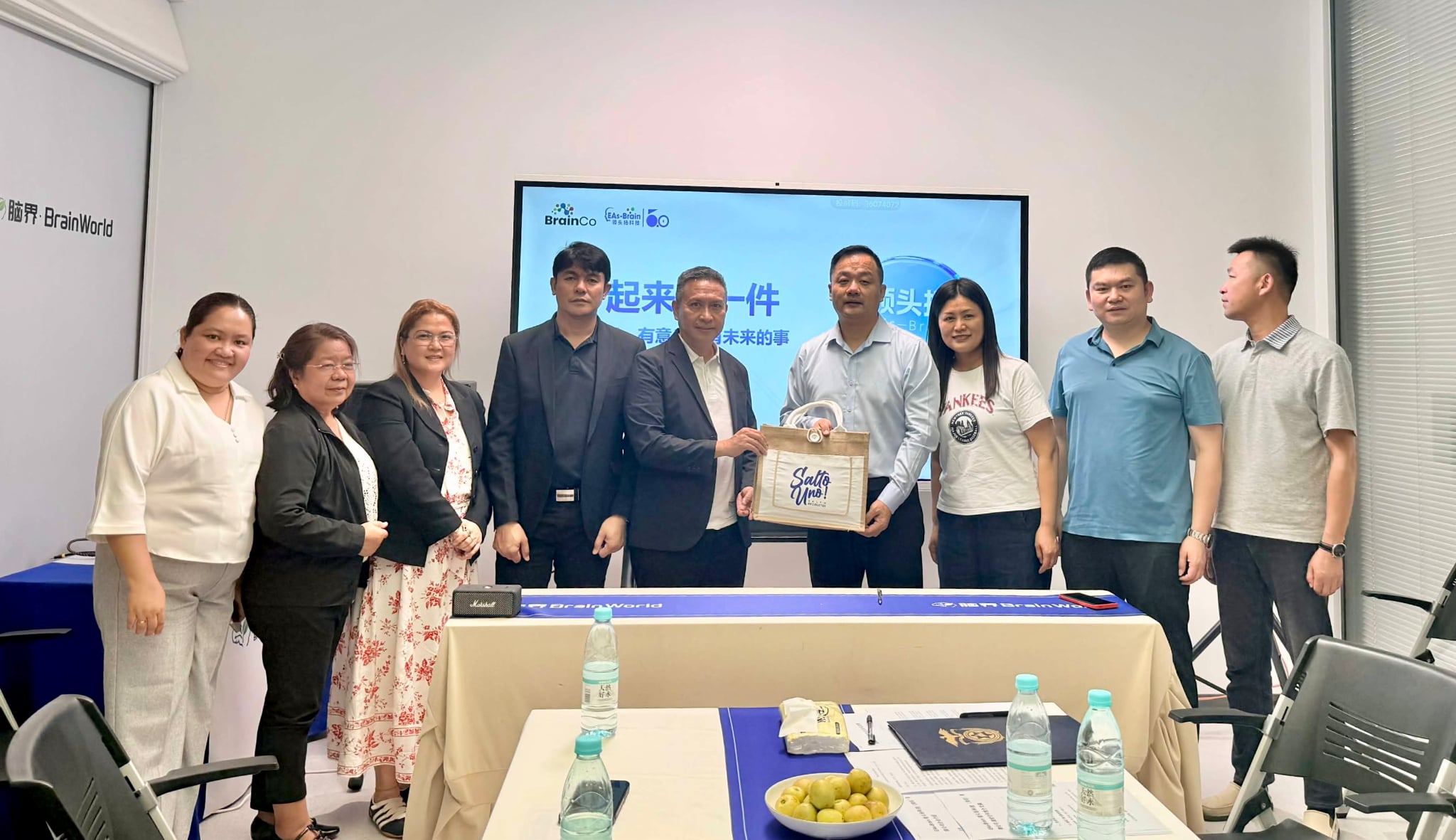
HANGZHOU, CHINA — The University of Negros Occidental-Recoletos, Inc. (UNO-R) and EAS-Brain Leading Yang Technology (Shenzhen) Co., Ltd. signed a Memorandum of Understanding (MOU) on August 11, 2026, opening new avenues for collaboration in research, academic activities, and brain-computer interface (BCI) technology.
Rev. Fr. Joel A. Alve, OAR, University President, Rev. Fr. Leo G. Alaras, OAR, Vice President for Academics and Research, both representing UNO-R and Mr. Fang Junhai, President of EAS-Brain Leading Yang Technology, with Ms. Ren Xinguang, Marketing Director, signed the agreement.
EAS-Brain Leading Yang Technology focuses on the interdisciplinary fields of brain science, cognitive psychology, and artificial intelligence, developing lightweight brain-computer intelligent devices and system platforms designed for university teaching and training, research, talent development, and academic science popularization.
The partnership will facilitate cooperation through UNO-R’s Internationalization Office and EAS-Brain’s authorized representatives in research and academic activities, faculty and student exchange, study tours, faculty training, student internships abroad, adoption of brain-computer interface devices and equipment, multilateral collaborations, and joint publications.
Fr. Alve underscored the potential of the technology to support UNO-R’s academic and service initiatives, particularly its Recoletos de Bacolod Psychotrauma Clinic, which he noted is one of only three psycho-trauma centers in the Philippines. The technology is expected to provide opportunities for innovation and further development of the university’s programs in psychology, research, and related fields.
The collaboration also advances UNO-R’s thrust to expose its academic community to emerging technologies and global innovations, while strengthening its research and development initiatives through international industry-academe partnerships.
The MOU marks another milestone in UNO-R’s internationalization journey—bringing together education, brain science, artificial intelligence, research, and industry to create opportunities for innovation and meaningful academic collaboration.